 Football Chess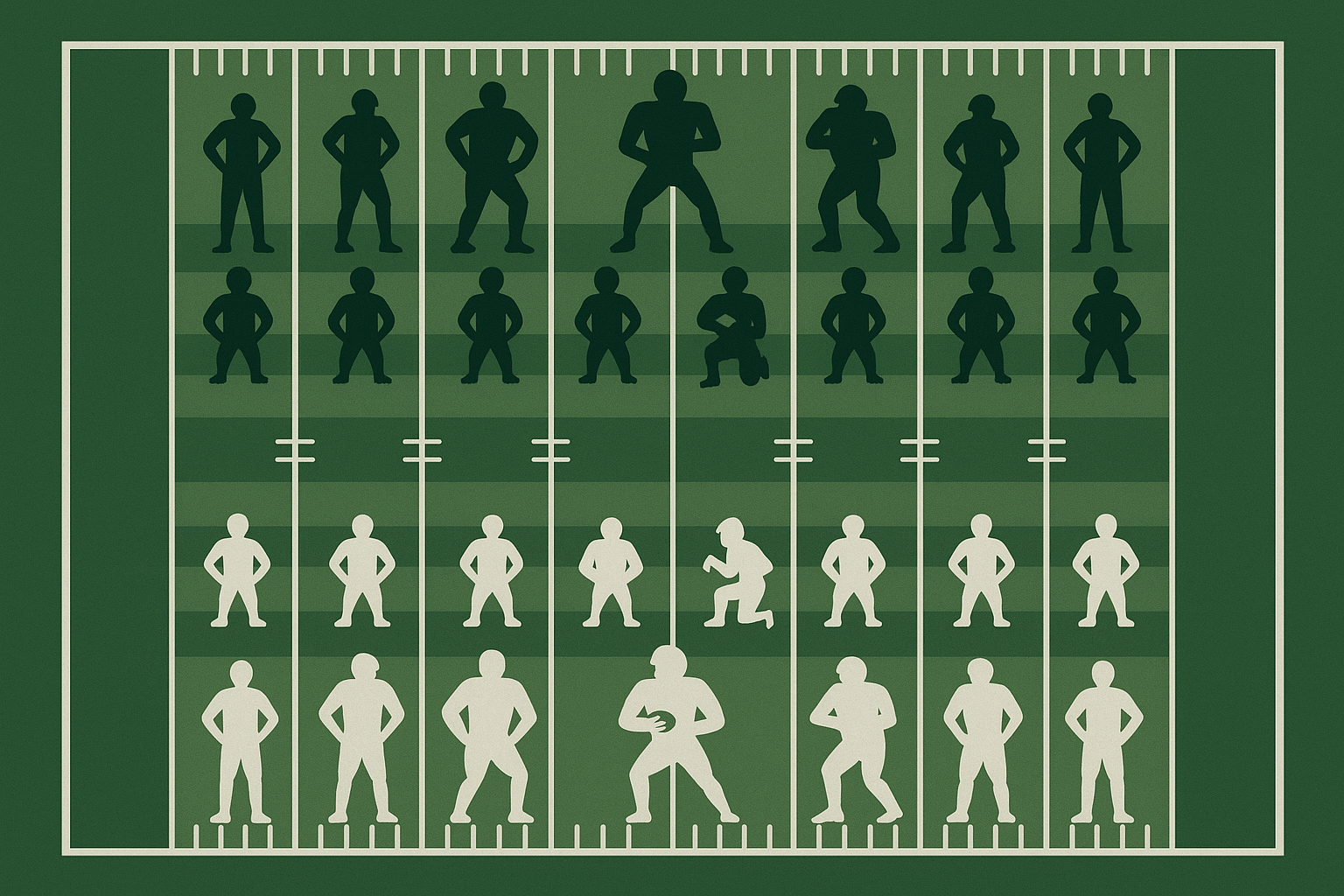
How to Play Football Chess: A Complete Beginner's Guide
Football Chess is a chess variant where every piece moves like a football player. Instead of queens and bishops, you have Quarterbacks, Linemen, and Wide Receivers — each with movement patterns inspired by their real football roles.
If you've played chess before, you'll feel at home. If you haven't, don't worry — we'll walk you through everything.
The Basic Idea
The goal is the same as chess: capture the opponent's King (the Commissioner). But instead of a standard 8×8 board with medieval pieces, you're playing on a football field with a full offensive lineup.
Each piece moves in a way that reflects its football role. A Lineman pushes forward — powerful but slow. A Wide Receiver streaks down the field in straight lines. A Running Back can dodge and cut in any direction over short distances.
The Pieces
Commissioner (King equivalent) The Commissioner moves one square in any direction, just like a chess king. Protect him at all costs.
Quarterback (Queen equivalent) The most powerful piece. The QB can move any number of squares in any direction — horizontally, vertically, or diagonally. In football terms, he can throw anywhere on the field.
Wide Receiver (Bishop equivalent) Wide Receivers move diagonally any number of squares. You start with two — one on each color. They're fast but limited to their diagonal lanes.
Tight End (Rook equivalent) The Tight End moves horizontally or vertically any number of squares. Excellent for controlling lines of the field and setting up plays along the sideline.
Running Back (Knight equivalent) The Running Back moves in an L-shape, just like a chess knight — two squares in one direction, then one square perpendicular. It's the only piece that can jump over others. Fast, unpredictable, and hard to defend.
Linemen (Pawn equivalent) Linemen move one square forward and capture diagonally forward, just like pawns. They're the foot soldiers of your offense. If a Lineman reaches the opponent's end zone (the last rank), it promotes to any piece you choose.
Setting Up the Board
The board starts with your pieces lined up at the line of scrimmage (your back two rows). The Commissioner sits in the center, protected by the Quarterback beside him, Tight Ends on the edges, Wide Receivers on the inner diagonals, and Running Backs next to them. Linemen form your front line.
Your opponent mirrors this setup from the opposite end zone.
How a Turn Works
On your turn, move one piece according to its movement rules. If your piece lands on an opponent's piece, that piece is captured and removed from the board.
Check, checkmate, and draws work the same as standard chess. If the Commissioner is in check, you must get him out. If there's no legal move to escape check, it's checkmate — game over.
Key Differences from Regular Chess
- Piece names are football-themed — same movement, different names (helps with the theme, might take a moment to memorize)
- Promotion — Linemen that reach the end zone can become any piece, including a second Quarterback
- No en passant — Football Chess doesn't include en passant captures (keeping it simpler)
- Castling — Not implemented in the current version; the Commissioner cannot castle
Tips for New Players
1. Control the center early. The middle of the field gives your pieces maximum range. Move your Linemen and Running Backs to contest the center early on.
2. Don't leave your Commissioner exposed. Move your Linemen to create a defensive pocket before launching attacks.
3. Running Backs are your surprise weapons. Their L-shaped jump means they can attack squares that other pieces can't reach. Use them to fork opponents — attacking two pieces at once.
4. Wide Receivers are long-range threats. Position them early so they control long diagonal lanes toward the opponent's end zone.
5. Think ahead. Like chess, Football Chess rewards planning. Before you move, ask: what does this let my opponent do?
Ready to Play?
The best way to learn is to play. Start a game now and see how the pieces feel in action. You'll pick up the rhythm quickly, especially if you've played chess before.
If you want a deeper understanding of the rules, check out the full rules page.
Good luck out there!