 Football Chess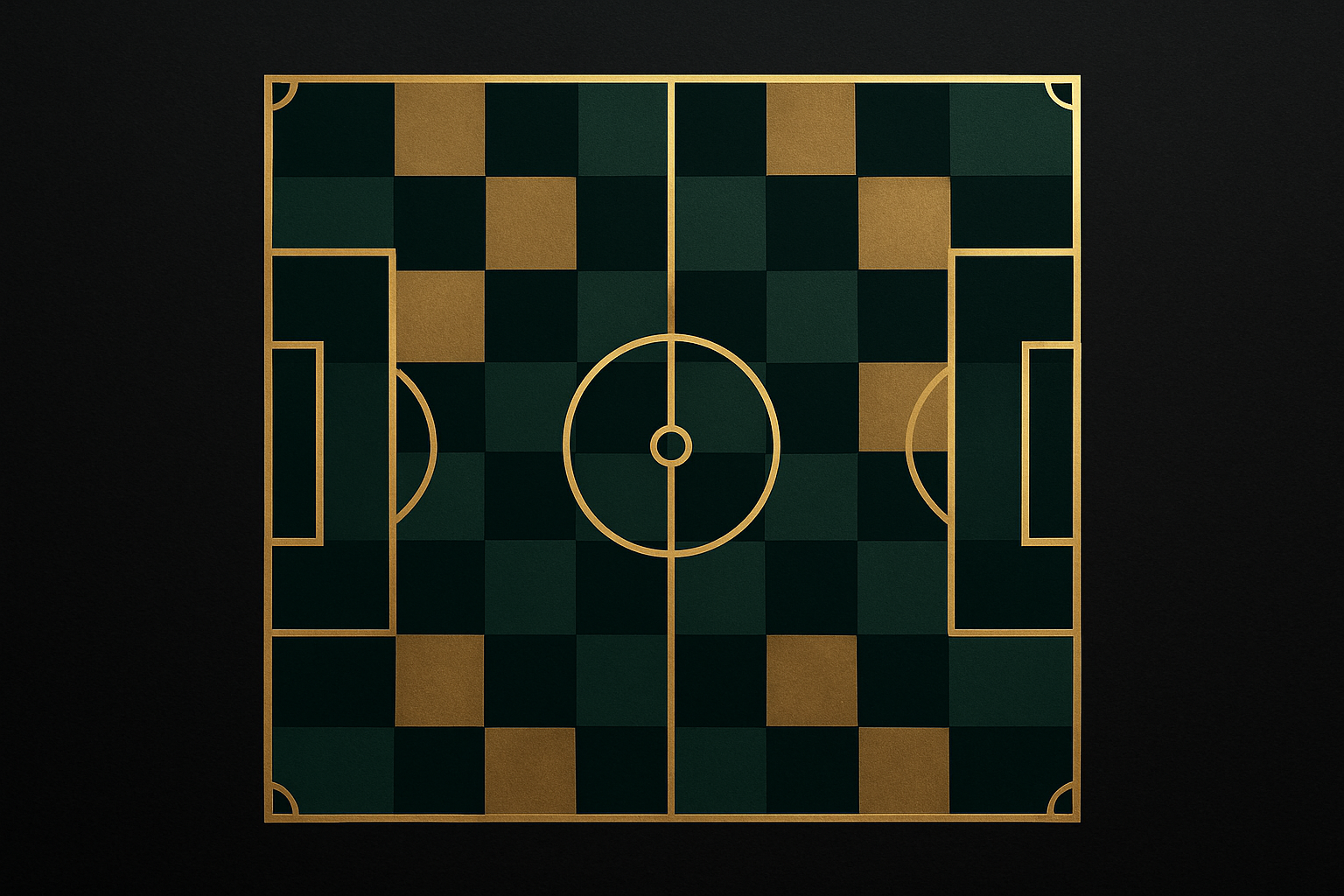
Chess Meets Football: What Happens When You Combine the Two Greatest Strategy Games
Chess and football don't look like they belong in the same sentence. One is quiet, slow, played on a wooden board. The other is loud, violent, played on 100 yards of grass by enormous people in helmets.
But spend time inside both games and something surprising emerges: they're solving the same problem. How do you move pieces through space, control territory, and create openings the opponent can't recover from — while they're trying to do the same thing to you?
The overlap is deep. Here's what chess and football actually share, and what each game can teach the other.
Why Chess and Football Are Natural Partners
Both games are fundamentally about spatial control. In chess, you control squares — a bishop on a long diagonal dominates the board. In football, you control gaps — a lineman who owns the A-gap shuts down the run game on that side.
Both games have a line of engagement. Chess has the center. Football has the line of scrimmage. The player who wins the center or wins the trenches typically wins the game. Everything else radiates out from that core conflict.
Both games reward thinking two moves ahead. A chess player who sees only their current move loses to positional pressure they didn't anticipate. A football coach who only calls plays for what's showing loses to disguised coverages and stunts. The game is always about the position three plays from now, not just this one.
And both games have tempo — the idea that forcing your opponent to react costs them options. In chess, tempo means making threats that must be answered. In football, a fast no-huddle offense forces the defense to substitute less and think less. Tempo is leverage.
What Chess Players Can Learn From Football
Formations are openings. In chess, an opening is a coordinated piece development plan — the Sicilian, the King's Indian, the Ruy López. Each has its own logic, its own tradeoffs. Football coaches think exactly this way about formations. A 4-3 defense has different strengths than a 3-4. A spread offense creates different problems than a pro-style attack.
If you're a chess player: start thinking about your opening not as memorized lines but as a formation — what piece cluster is most threatening, and what does it cost you to set it up?
Matchups matter more than raw piece value. Football coaches obsess over matchups. A fast slot receiver against a linebacker is an automatic exploit. Chess players sometimes forget this: a powerful piece on the wrong square is worse than a modest piece on the right one. A rook sitting behind its own pawns is a linebacker chasing a wide receiver — technically a valuable unit, practically useless in that role.
Momentum is real. Football teams know that a quick score shifts psychological pressure. Chess players underestimate this. Forcing rapid exchanges that improve your position slightly is often better than holding a long-term advantage that never converts. Cash in when you can.
What Football Fans Can Learn From Chess
Piece value is positional, not absolute. Chess assigns rough values to pieces — a queen is worth about 9 pawns, a rook is worth 5 — but experienced players know these are guidelines, not rules. A passed pawn about to promote is worth more than a passive rook. Football fans already understand this: a cornerback is only as valuable as the receiver he's covering. A running back in a pass-heavy offense is underutilized regardless of talent. Value is always contextual.
The endgame is a different game. Chess has a phase called the endgame — when most pieces are off the board and pawn structure determines everything. Football has its equivalent in two-minute drill and clock management. The rules don't change, but the priorities invert completely. Suddenly, field position and time management dominate over raw scoring ability. Teams that win close games have figured out this phase.
Tempo and initiative compound. Chess has a concept called the "initiative" — if you're forcing responses, your opponent can't pursue their own plan. Football coaches call it "dictating." An offense that makes the defense call timeouts, adjust late, or react to your motion is winning the tempo war. The strategic principle is identical: make your opponent's plan irrelevant by making them answer yours.
FootballChess: Where These Worlds Collide
If you've read this far and thought "someone should just build a game that combines these" — that's exactly what FootballChess is.
It's a strategy game that uses chess piece movement as its mechanical engine but runs on American football rules. Your Quarterback moves like a queen. Your Wide Receiver runs bishop routes. But instead of checkmate, you're driving for touchdowns across four downs and four quarters.
The result is a game that asks you to think like both a chess player and a football coach simultaneously — reading the board spatially, setting formations, calling plays, and managing tempo. Everything on this page applies directly.
Learn how to play → or start a game now → — no account needed.
Chess and football were always playing the same game. FootballChess just makes it literal.